One morning, you notice one random chin hair. Then another appears. Suddenly, you’re checking the mirror and wondering, Where did these hairs come from, and why didn’t I notice them before?
No, you’re not imagining things. Facial hair really can become more noticeable as we get older.
Changes in facial hair are more common than many people realize, and hormones, genetics, and aging can all play a role.
Our Hair Changes Throughout Our Lives
Our hair is constantly cycling, even when we don’t notice it. Hair follicles are not simply little holes that continuously produce the same hair forever. Hair follicles move through phases of activity and rest throughout our lifetime, just as we do.
Most of the human body is covered in vellus hair, or “peach fuzz.” However, hormonal influences can cause some vellus hairs to develop into terminal hairs, which are longer, thicker, and often more pigmented.
Puberty is a prime example of this. Before puberty, someone may have barely noticeable fine hairs in an area. During and after puberty, some of those hairs can become thicker, longer, and more pigmented. Hair can continue to change in adulthood, too, so noticing changes later in life isn’t as strange as it may initially seem.
Hair aging isn’t limited to going gray. As we get older, changes within our bodies can affect how our follicles function and the characteristics of the hairs they produce. So that coarse hair that seems to have appeared out of nowhere may not necessarily come from a brand-new follicle. The follicle may simply be producing a hair that is now much easier to see.
Hormones Play a Big Role
Hormones are one of the signals that influence how certain hair follicles behave. Androgens aren’t exclusively “male hormones.” They are present in women as well as men and influence hair growth, but their effects can differ depending on the area of the body and the individual follicle.
Androgens can encourage thicker, darker terminal hair growth in certain areas of the body. But the amount of androgen circulating in the body isn’t the only factor. Individual hair follicles can differ in how sensitive they are to androgen activity.
So, it isn’t simply a matter of “more testosterone = more facial hair.” Two people can have different hair-growth patterns because follicle sensitivity also matters.
Our hormonal environment isn’t constant throughout our lifetime. Changes in the balance between estrogen and androgens can affect hair growth. Someone might wonder, “How am I getting MORE chin hair while the hair on my head is getting thinner?” During menopause, some women may notice more facial hair while also experiencing thinning scalp hair.
As the hormonal environment changes with age, particularly during perimenopause and menopause, the relative influence of androgens on certain facial follicles can become more noticeable, contributing to coarser facial hair in some people.
Why Chin and Jawline Hair Become More Noticeable With Age
For many people, these changes seem to show up in very specific places: a coarse hair under the chin, several darker hairs along the jawline, or increasingly noticeable hair above the lip.
Why these areas, and why now?
As estrogen levels decline around menopause, the balance between estrogen and androgens changes, which can make androgen effects more noticeable in some hair follicles.
Androgen-sensitive follicles can respond to hormonal signals by producing more terminal-type hair. You may be experiencing a change in the characteristics and visibility of hair produced by existing follicles rather than developing an entirely new crop of follicles.
In other words, just as we change with age, our hair can change with us. The fine, barely noticeable hair you once overlooked may become thicker, darker, or simply much harder to ignore.

Genetics Matter, Too
If hormones affect everyone’s hair, why do some people develop much more noticeable facial hair than others?
Hormone levels aren’t the whole story. Genetics, follicle sensitivity, family patterns, and ancestry can all influence how facial hair presents.
Our hair follicles don’t all respond to hormones in exactly the same way. Genetics can influence how sensitive certain follicles are to androgen activity, helping explain why facial-hair patterns vary so much from person to person. If you’ve noticed similar facial-hair patterns in your mother, grandmother, sisters, or other relatives, genetics may be part of the picture.
Hair-growth patterns also vary among individuals and populations, which is why there isn’t one universal amount or pattern of facial hair that is considered typical for everyone.
Having more facial hair than someone else doesn’t automatically mean there’s something medically wrong. Genetics, ancestry, hormones, and individual follicle sensitivity all contribute to the wide range of facial-hair patterns we see. But if your facial hair changes suddenly or significantly rather than gradually over time, that can be a different situation.
When Is New Facial Hair Worth Mentioning to Your Doctor?
Gradual changes in facial hair can occur throughout life, and developing a few more noticeable hairs doesn’t automatically mean something is wrong. However, a rapid or substantial increase in coarse facial or body hair, especially when accompanied by other changes, is worth discussing with a healthcare provider.
Changes worth mentioning to your healthcare provider can include a sudden increase in coarse facial or body hair accompanied by irregular periods, significant or worsening acne, scalp hair loss, or voice changes.
Sometimes increased facial hair can be associated with an underlying hormonal or medical condition, such as Polyendocrine Metabolic Ovarian Syndrome (PMOS), or with certain medications.
Determining why hair growth has changed and deciding what to do about the unwanted hair are two different questions. A healthcare professional can investigate an underlying cause when appropriate, while an electrologist can address the unwanted hair itself.
And sometimes there isn’t a bigger medical question at all. You simply don’t like the hair that’s there. That’s reason enough to explore your options.
What If You Just Don’t Want the Hair?
Facial hair can be completely normal and still be something you personally don’t want. Choosing to remove it is a personal preference, not an indication that there’s anything wrong with having it.
There are plenty of ways to manage unwanted facial hair. Shaving, tweezing, waxing, and threading offer temporary options, while laser and electrolysis take different approaches to longer-term hair management. If you’re curious about the differences between the two, read our article, Electrolysis vs Laser on Facial Hair.
But if you’re tired of repeatedly finding, tweezing, or otherwise managing unwanted facial hairs, electrolysis offers another option: permanent hair removal.
How Electrolysis Can Help With Unwanted Facial Hair
Maybe you started with that one chin hair. Then there were several more, and before you knew it, reaching for the tweezers had become part of your regular routine.
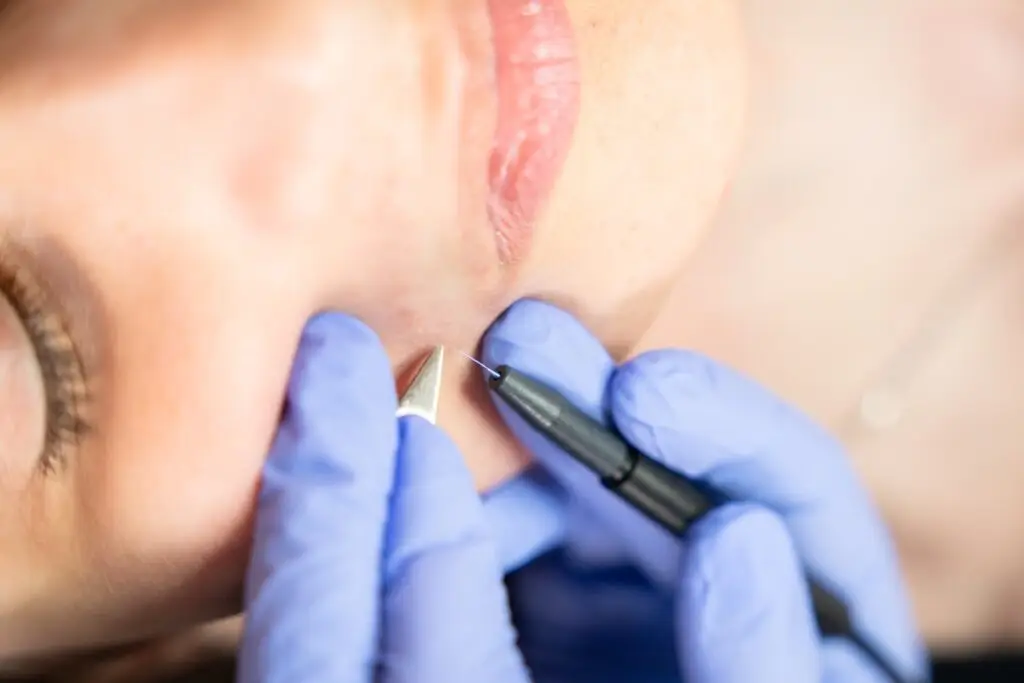
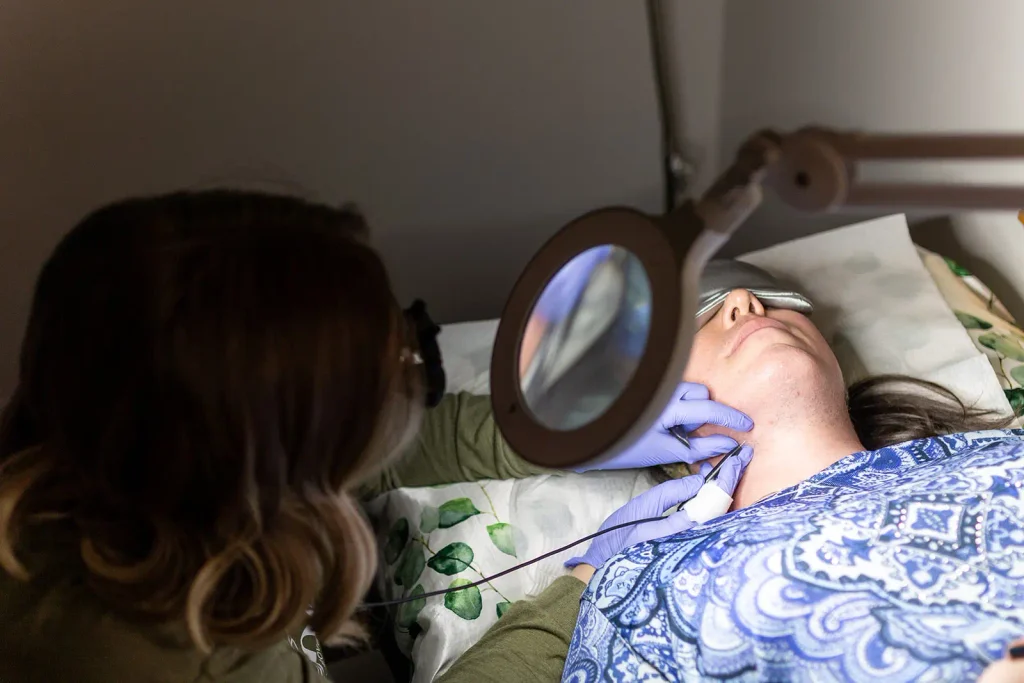
Electrolysis treats individual hair follicles and can permanently remove unwanted hair over the course of treatment. Because electrolysis does not depend on hair pigment to target the hair, it can treat hair of any color, including dark, blonde, red, gray, and white hairs.
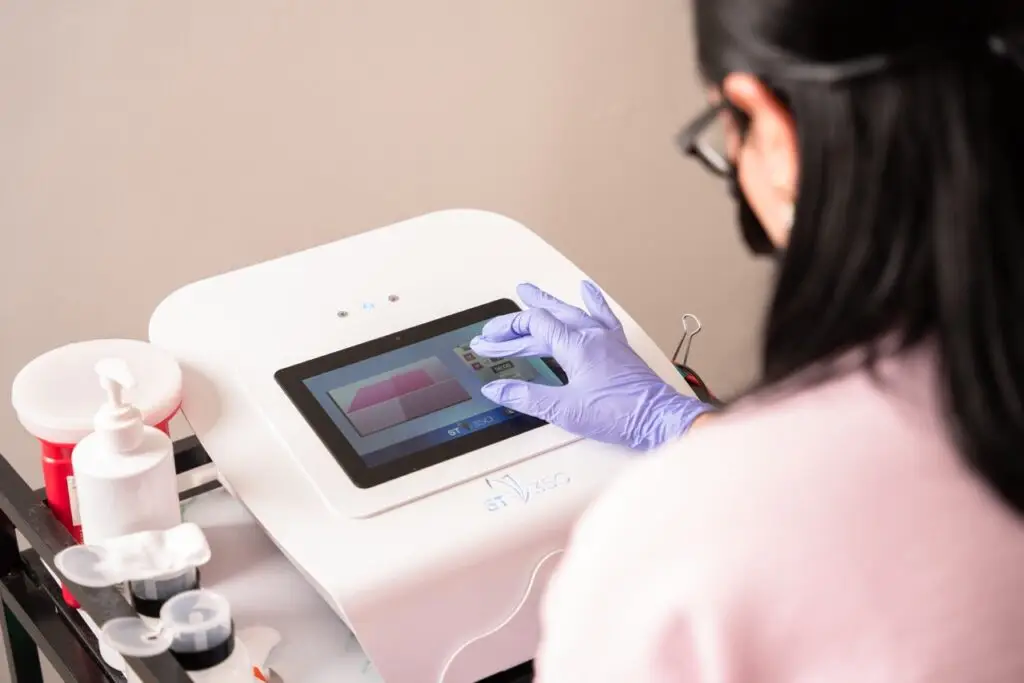
That makes electrolysis an option whether you’re bothered by a handful of stubborn chin hairs or want to address a larger area of unwanted facial hair. Treatment can be tailored to the amount of hair you have, the area being treated, and your individual goals.
That random chin hair didn’t necessarily appear because anything is “wrong.” Hair changes throughout our lives, just like the rest of our bodies. Understanding why it happens can take some of the mystery out of it, and what you choose to do with that hair is entirely up to you.